The Crossed Quills: A Symbol for the Art of Argument
5 min read · Design & Philosophy
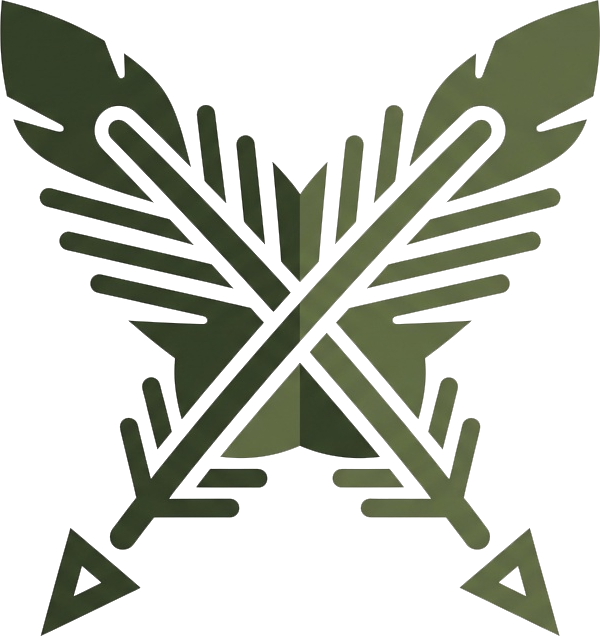
Every symbol tells a story. When we set out to create the visual identity for DebateClub, we knew it had to capture something essential about what happens when two minds meet in argument. Not conflict for its own sake, but the kind of productive collision that sharpens ideas and reveals truth.
The result is the crossed quills: two feather pens crossed like swords, a visual metaphor for the oldest form of intellectual combat.
The Pen as Weapon
"The pen is mightier than the sword." Edward Bulwer-Lytton wrote those words in 1839, but the idea is ancient. Rhetoric, the art of persuasion, has toppled empires, launched revolutions, and changed the course of history more reliably than any army.
The quill pen was the instrument of this power for over a thousand years. From Cicero's orations to the Declaration of Independence, the quill was how arguments were refined, recorded, and transmitted across time. When you see a quill, you see the legacy of every philosopher, lawyer, and statesman who shaped the world with words.
"In a republican nation whose citizens are to be led by reason and persuasion and not by force, the art of reasoning becomes of first importance."- Thomas Jefferson
By crossing two quills, we invoke the moment when two such weapons meet. Not to destroy, but to test. Every great debate is a duel of ideas where both sides emerge sharper for the encounter.
The Anatomy of the Mark
Look closely at the crossed quills and you will notice deliberate choices in every line:
The Crossing Point
The quills cross at their shafts, not their tips. This is intentional. The tips (the writing ends) point outward, ready to create. The crossing represents the moment of engagement, but the orientation reminds us that both parties leave the encounter ready to write, to build, to continue.
Bilateral Symmetry
The two quills are mirror images of each other. In heraldic tradition, this symmetry signals equality: neither combatant has an inherent advantage. Good debate begins from this premise: both sides deserve to be heard on equal footing.
The Feather Barbs
The stylized feather barbs along each quill add texture and organic warmth. These are not cold, industrial weapons. They are natural instruments, extensions of the human hand. Debate is a fundamentally human activity, and the logo reflects that.
The Nibs
The pointed nibs at the bottom of each quill are rendered as sharp triangles. These are the business end, the part that makes contact with the page, that commits ideas to permanence. Sharp, precise, and ready.
The Color of Conviction
The logo lives in a palette we call "Forest & Parchment": deep olive greens paired with warm cream and aged-paper tones. These colors were not chosen arbitrarily.
Deep Forest
#3C4A32
Olive Gold
#9A9A6D
Parchment
#FAFAF8
Deep Forest Green is the color of Oxford libraries, leather-bound first editions, and the baize of parliamentary debating chambers. It signals intellectual tradition without stuffiness. Serious, but not severe.
Olive Gold adds warmth and hints at the brass fittings of antique writing desks. It is the color of aged paper edges, of ideas that have stood the test of time.
Parchment White provides the ground: clean, open space where ideas can breathe. Like a blank page waiting for the next argument.
Classical Roots, Modern Practice
There is a tension at the heart of DebateClub: we are building cutting-edge AI technology to teach an art that is 2,500 years old. Aristotle codified rhetoric. Cicero perfected it. Lincoln and Douglas demonstrated it. And now you can practice it with a sparring partner that never tires.
The crossed quills bridge this gap. They are unmistakably classical (no one has written with a quill in over a century) yet they are rendered in a clean, geometric style that feels contemporary. History and innovation, tradition and technology, the ancient art and the modern tool.
The Lineage of Rhetoric
Ancient Greece (5th c. BCE)
    │
    ├── Aristotle's "Rhetoric"
    │   └── Logos, Pathos, Ethos
    │
    ▼
Roman Republic (1st c. BCE)
    │
    ├── Cicero's Orations
    │   └── "The Philippics"
    │
    ▼
Enlightenment (18th c.)
    │
    ├── Parliamentary Debate
    │   └── Burke, Fox, Pitt
    │
    ▼
Modern Era (20th c.)
    │
    ├── Broadcast Debate
    │   └── Kennedy-Nixon, 1960
    │
    ▼
Today
    │
    └── AI-Powered Practice
        └── DebateClub ✦
Why Symbols Matter
A logo is more than decoration. It is a promise. Every time you see the crossed quills, you should be reminded of what you are here to do: to sharpen your ability to persuade, to think clearly under pressure, to win arguments not through volume but through skill.
The quills remind us that words have power. The crossing reminds us that debate is a contest. The symmetry reminds us that we owe our opponents the respect of taking their arguments seriously. And the sharp nibs remind us to be precise: to say exactly what we mean.
"The object of oratory is not truth, but persuasion."- Thomas Babington Macaulay
Pick Up Your Quill
The next time you open DebateClub, take a moment to look at the logo. Remind yourself that you are joining a tradition that stretches back millennia. You are practicing the same skills that Demosthenes practiced on the shores of the Aegean, that Lincoln practiced in dusty Illinois courtrooms, that every effective leader in history has cultivated.
The quills are crossed. The debate is on.
Your move.
Ready to Cross Quills?
Start your first practice debate and join the lineage of great orators.
Start Practicing